Welcome to K C Yan's Singapore Math blog!

Wanting to be updated on Singapore Math news or new Singapore Math? You have come at the right place! Please leave your comments before leaving. A googol thanks.

Singapore Math

Tuesday, July 12, 2011

Mathematical Haikus for Kiasus

Some 17 odd hours ago, I posted "Mathematical Haikus for Goondus* and Suakus" on Facebook. I hypothesized that composing or formulating these 17-syllabled verses may help one to balance the left mathematical part with the often-atrophied right part of the brainHere's another lot of these 5-7-5-like crude non-seasonal poems.


Make Every Nanosecond Count

Three scores and ten
Roughly a billion heartbeats
Use your time wisely

How Many Misteaks Are There?

On the train platform
Train arriving in ''one mins''
That's non-SI time!

Issued by Japan in 1984 


Rightly Theirs
That kids can recall
Pythagorean Theorem
That proves their "math rights"


The Craze Is Back
http://www.rubiks.com
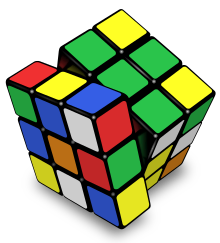
Dare to sign up for
Rubik's Cube Competition?
That's raw math talent! 


A Modern-day Rubik Cube

Sudoku, again?
Think of something more worthy
To tickle your brain

http://en.wikipedia.org/wiki/Fifteen_puzzle


Sam Loyd’s Alleged Invention

That cheap toy of yesteryear
Order it on eBay


A Math Competition for All

AMC* is best
The most popular contest
In the world today

*Australian Mathematics Competition


Where Cool Math Things Happen

MAA is cool!
The association to be
For math geeks and nerds


The World's Most Disliked Subject

Why you dislike math?
MATH is a four-letter word
A turn-off for kids

A Key to Unlocking the Universe’s Secrets

Math is a language
With notations and notions
To model the world


Some Like It With an “S”

Is it MATH or MATHS?
It all depends where you live!
Your location counts.
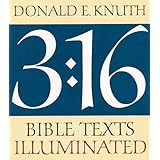

Product Details


The Most Quoted Verse

What's John 3:16?
God's numerical message
Of His Love for you


NUMBERS 1:1-36:13 

The Book of Numbers
Is not really a math book
But God's Almanac! 


Social Media MATH

To blog or to tweet?
It's hard to make up my mind
I choose to do both

TWITTER Math

Micromath 4 U
In 140 words
To share your sweet tweets


FACEBOOK Math

Five-minute math posts
On pop culture and gossip
For friends, fiends, and foes


The Chewing Gum Land

A math sanctuary
The ''fine city'' Singapore
Offers jail and cane


Triple Firsts in TIMSS

SINgapore’s success?
A haven of ''cheat/cheap'' books
© Yan Kow Cheong, 2011

To meet kiasus’ needs


Superstitiously Yours 

Friday the 13th 
An urban myth to promote 
Irrational fear


Apocalypse now

Faith in the Mayas
Dec 21, 2012
Where will you be then?


Singapore’s Papyrus

The model method
A mere fad or a cool tool?
To soothe the mind's eye


Faith or Fear in 1’s and 2’s

The Y2K scare
Next it's 12/21/12
Marketing faux fear?


© 2012 Yan Kow Cheong

Another Creative Math Title

Cre8tively yours
Who Took My Calculator?
Coming your way soon!

It's time to compose a few mathematical haikus to tickle the right part of your grey matter. And remember to share them with the rest of the mathematical brethren.

A 17-letter 
m-a-t-h-e-m-a-t-i-c-a-l H-A-I-K-U
Longs to be composed

* Suakus and Goondus are the Asian equivalents of Dummies, Idiots, Blockheads, and Morons.
# Kiasus are those who are afraid to lose out, displaying signs of self-centeredness and selfishness.

© Yan Kow Cheong, July 10, 2011

Monday, June 6, 2011

Censored Math Questions from Singapore

In late nineties, during the dot-com fever, while providing CD-ROM contents for a local multimedia company, I came up with a mild collection of contextual word problems, following the call by the National Council of Teachers of Mathematics (NCTM) then to pose some real-life problems to make the subject relevant and meaningful. Unfortunately but not surprisingly, the board of [conservative] editors vetting the questions rejected them.

Here’s a sample of that collection, which were deemed “contextually relevant” but “pedagogically insensitive” or “culturally loaded,” whatever those terms meant.

Questions
1. Joe managed to bribe the customs officer by bringing in boxes of chewing gum to be distributed among his gang members. The merchandise was allowed after Joe agreed to pay $20 per box for half the number of boxes smuggled, $10 for every three of the remaining boxes, and an additional sum of $50. If Joe was charged $330, how many chewing gum boxes did Joe smuggle? (24)

2. A property agent hinted to his client that he could help him pay less on stamp duties for his flat, if he agreed to undervalue his property. The unscrupulous seller found that he could gain $67,500, if he were to declare to the Housing Board that he was selling at 2/3 of the actual price of his apartment, and was giving the agent 1/10 of the difference. How much did the buyer actually pay for the apartment? ($225,000)      

3. Mike Ray got six strokes of the cane for his juvenile crimes. Fearing that a heavy penalty might lead to a boycott of the country’s goods, the judge decided to sentence the American teenager leniently. The light sentence was formulated based on the number of offences committed: two strokes for every five offences for the first half of the total number of offences, and one stroke for every five offences for the other half of his transgressions. How many offences did Mike commit? (30)

4. A principal had his jail sentence halved after he admitted to molesting two of his female teachers and some of his school girls. Because of his outstanding contribution in the field of education, the lady judge mercifully sentenced the principal to five years for every three victims. How many girls did the principal take advantage of, if his sentence was reduced to 10 years? (10) 

5. A foreign tourist was found guilty of multiple crimes perpetrated against foreign maids working in Singapore. He was charged for outraging the modesty of two women, and the penalty carries a maximum jail sentence of 5 years. His pick-pocketing activities landed him with another 3 years behind the bar. He served one quarter of his remaining jail sentence for exhibitionism, and served his last six years for beating two policemen. How long did he stay in jail? (16)       

Some reasons given for rejecting the above questions were:

Question 1 allegedly promotes bribery and corruption.

Question 2 encourages corruption and dishonesty.

Question 3 nurses permissive juvenile delinquency and xenophobia.

Question 4 supposedly promotes rape, outrage modesty, and the like.

Question 5 encourages crime and murders of the second, third, and fourth degrees!

Of course, these tongue-in-cheek questions were written lightheartedly to add some spice to the pool of hundreds of artificially posed questions needed for the CD-ROMs. But they're censored right away without any suggestions to rewriting them.

Indeed, one recurring complaint among scores of local math educators and parents that our locally published math titles are replete with sterile, politically correct questions (which bore many students to tears), is an understatement, to say the least.

We, teachers and writers, look to the days when we'd truly and fearlessly be able to set real-world questions that our students and their teachers could relate to—by posing contextual problems that offer a rich conceptual understanding of mathematical topics.

If you think that your child or student may not be quite ready or mature enough for the above fertile, politically incorrect questions, may I invite you to some aha! math questions instead? You may download them from  and 

© Yan Kow Cheong, June 5, 2011

Sunday, May 1, 2011

The Lighter Side of Singapore Math (Part 3)

Is the Singapore model method a plus or minus?

Skeptics or critics: "The model method is pre-algebra in disguise."
Proof: Use of a bar instead of a variable x.

Agnostics: "I've faith in Back to basics!"
Proof: I never use x, y, z nor any models in everyday life.

Believers: "The model method is visual algebra in elementary math."
Proof: Singapore's top rankings in TIMSS.

The Aftermath of TIMSS


One by-product of Singapore's top TIMSS ranking: Low fertility rate of 1.16 of its population—way below the replacement level of 2.1 At the current rate, Singapore might cease to exist!

Outsource your math to Singapore, not to Bengalore.
Bengalore the tedious and monotonous, Singapore the creative and innovative.

The red dot in South East Asia [Singapore] had leaked into the sea of math education, forcing [American] states to reassess both curriculums and pedagogies. 


Half-baked Papers from School of Education researchers: 

"How to wean the elementary student from models to algebra"

"Beyond the Singapore Model Method"

"Should SINGAPORE MATH be ©opyrighted?" 

"Could Korea Math be the next mathematical fad?" 


Six Top Oft-quoted Factors for Singapore's Success in TIMSS

1. Excellent textbooks

2. Good teachers

3. High pay for teachers

4. Society's high regard of teachers 

5. Good career path for math teachers

6. Teachers mostly math majors or minors

Six Key Factors of Singapore's Success in TIMSS

1. Nation-wide private tuitions (individual or group) to make up for poor teaching in schools.

2. Parental involvement—many parents taking leave to coach their kids closer to exam time.

3. Practice of drill-and-kill assessment [supplementary] questions assigned by kiasu parents, tutors, and teachers.

4. Self-help groups such as CDAC, MENDAKISINDA to help the weaker—and economically challenged—students.

5. Remedial math lessons disguised as "enrichment math" programs.

6. Community clubs (CC's) tuitions for average or below-average income earners.

In the Pipeline...

New citizens- and permanent-residents-to-be may soon have to know how to solve one or two word problems, using the model method, as they sit for the literacy-numeracy test for those who don't have a formal education. Indeed, a stressful time for new immigrants!

Line Method vs. Bar Method

The line method is to the bar method what the soroban is to the Chinese abacus. http://tinyurl.com/4rxdky3

A Dozen Tweets from @MathPlus

The Light Bulb: How many Singapore math educators does it take to change a light bulb? It depends on the type of model they draw.

A numerologist is a "make-believe" number theorist trying to fool the innumerates that numbers have powers to rule their lives.

How many US politicians does it take to adopt Singapore #math? Three: To prove Singapore's existence, location & its relation to election.

Singapore #math authors may be the least credited in the world, as their first names are often mistakenly referenced for their surnames.

Beyond Singapore math textbooks & workbooks, here are some enrichment & creative math titles to tickle the brain: http://tinyurl.com/3lfuzsf

Anything cat-size or smaller tastes like chicken. Creatures roughly dog-size taste like pork; anything larger tastes like beef.

Benjamin Vitale: "Russian Math is hard work, Singapore Math is smart work." Famous Russian mat'cians aplenty proves they're doing sth right!

Her double masters didn't help her math⎯she lost $100,300 in casino. http://bit.ly/hWnVms She's faith in the "Lore of Averages"!

Singapore math on its own cannot magically turn a bad teacher into a good one, but it can make a good one better.

A Postmodern Equation: Life - Love = Autumn + Spring + Winter

Since 1991, Lee Kuan Yew gave some $13 million to #charity⎯earnings from his memoirs, speaking engagements, and being on advisory boards.

With perfect equality at zero, Singapore's Gini score (a measure of income inequality) is World's No. 2 at 0.42, behind Hong Kong's 0.43.

Zero Tweets from @Zero_Math

Join the ZERO-MATH Fan Club, by following K. C. Yan as @Zero_Math and share your zero tweets with the Zero-Math brethren! Here's a sample of them:

A #Math Quickie: The temperature is forecast to be twice as cold as today. If today is zero degrees, what will tomorrow's temperature be?

Zero is inarguably a Hindu invention, but textbooks still attribute its origin to both Hindus and Muslims. Political or racial correctness?

How to Lie with Zero: 0% Bank Loan, 0% Interest, Zero Down-payment, ... #zero #interest #marketing

A Dangerously Zero Thought: "It's the thoughtlessness that counts!"#zero

© Yan Kow Cheong, May 1, 2011

Saturday, March 5, 2011

Are You a Number?

There is no dearth of books offering advice on what you might call your baby (and even your dog or cat), many of them focusing on the meanings of names. How many of you actually know the meaning of your own names?

Recently, I posted these “Apple people” on Twitter (@MathPlus):

I. Pad Born 11 November 1944; died Toa Alta, Puerto Rico, 30 August 2009.
I. Phone Born Romania, c.1881 (Bronx, New York, 1920 US census).
I. Pod Baptized Whatfield, Suffolk, 20 May 1638.
I. Tunes Married Durham, 1874.

Of course, we can’t discount the possibility that some names might have been recorded thanks to a mistake on the part of a registrar who misheard, or have been transcribed from a half-legible census return. For instance, a number of mainland Chinese fleeing the Communists for a better life had their names “mutilated” by the natives of the countries they landed in.

My Bogus Surname

The Chinese character for my surname translates into “Chew” or “Kew” [depending on the dialect], but an Indian chap of yesteryear mis-registered my father’s surname as “Yan” instead. The aftermath of such an error had only led to anger and frustration; and imagine how much wasted money and time that represent in having to explain why the Chinese and Romanized characters don’t match. Changing your name by deed poll simply can't undo a faux pas of that nature!

In Praise of Numbers

Many of us had read about or met people with names like John Smith, Jr. and Tom Bacon II, where some numeral or abbreviation is being appended to a name, but have we ever come across folks whose names are a number itself? Here are a baker’s dozen of such “numerical characters.”

Zero
Zero Queen, born Cleverland, North Carolina, USA, 10 September 1888; died Elbert, West Virginia, 9 April 1954

One
William No. 1 Harris, married Islington, London, 1896

Two
William No. 2 Harris, married Maria A. Trent, Islington, London, 1913
Harry Two Smith, married Derby, Derbyshire, 1900

Three
Three Worthy, born 1 June 1907; died Linden, Alabama, USA, April 1981

Four
Four Souls, born 16 April 1907; died Box Elder, Montana, USA, July 1984

Five
Five Bumball, born Pennsylvania, c.1840 (Jackson, Missouri, 1920 US census)

Six
Six Hix, born South Carolina, c.1898 (Waterloo, South Carolina, 1910 US census)

Seven
Number Seven Fell, born Alton, Hampshire, 1879

Eight
Eight McClurg, born Iowa, c.1879 (White Breast, Iowa, 1880 US census)

Nine
Nine Sparks, born 18 July 1939; died Jackson, Montana, USA, 25 August 1995

Ten
Ten Hipkiss, born Birmingham, Warwickshire, c.1898 (Birmingham, 1911 Census)

Eleven
Eleven Moore, born 11 July 1900; died Coalgate, Oklahoma, USA, January 1982

Twelve
Twelve Ripley, born Illinois, 1887 (Ora, Illinois, 1900 US census)

Thirteen
Thirteen Sneed, born Tennessee, c.1882 (Tipton, Tennessee, 1920 US census)

As expected, there are also names for Fourteen, Fifteen, Sixteen, Seventeen, Eighteen, Nineteen, and Twenty. And names like Thirty, Forty, Fifty, Fifty Six, Fifty Nine, Sixty, Seventy, Eighty, and Ninety. Should you decide to organize a Math Trail, aimed at visiting cemeteries to locate these “numbers,” get a copy of Russell Ash’s latest humorous book, Frou-Frou, Frisby & Brick for your references.

Fractional Names, Anyone?

Even christening “fractional names” on babies hasn’t been spared:

Tenth (⅟₁₀)
Tenth Lily West, baptized Bedminster, Somerset, 22 June 1880
  
Eighth (⅛)
Eighth Hendricks, born Texas, c.1909 (Robertson, Texas, 1910 US census)

Fifth (⅕)
Fifth Jesse, born 14 November 1909; died Sacramento, California, USA, 16 March 1999

Quarter (¼)
Quarter Harris, baptized St Andrew Holborn, London, 1 May 1823

Half (½)
Half Robinson, born Banbury, Oxfordshire, 1859

In Love with Power-ful Names

If you want to lay flowers on the tombstones of multi-digit numbers, here are some Powers of Ten:

Hundred (102)
Hundred Evans, died Greene, Alabama, USA, 1 January 1949

Thousand (103)
Thousand Poindexter, born Louisiana, c.1888 (Gibson, Louisiana, 1920 US census)

Million (10⁶)
Million Airth, born Ontario, Canada, 4 June 1869

Billion (10⁹)
Billion Pride, born c.1898 (Brooklyn, New York, 1930 US census)

Trillion (10¹²)
Trillion Cummings, born Mississippi, c.1907 (Kirkville, Mississippi, 1910 US census)

Zillion
Zillion Long, born 16 March 1899; died Petersburg, Virginia, USA, October 1977

Infinity (∞)
Infinity Hubbard, born Georgia, c.1839 (Tippah, Mississippi, 1850 US census)

The Whys of Numbering a Name

As author Russell Ash remarked, could those numbers-names be due to some after-effect of an epidural? Maybe those bizarre naming decisions are merely the result of the tensions and euphoria of childbirth. Or, could those names commemorate a roulette win, or serve as a reminder of the sequence of one’s offspring from a previous unregistered polygamous marriage? My hypotheses are as wild as yours!

Promoting Name-calling via Name-giving

I recalled a couple in my previous fellowship group had christened their newborn after some biblical personality, which was difficult to pronounce, not to say, remember. Much as the parents might think they’re being clever and original (or even spirit-conscious), I wonder whether they had considered the correlation between bullying and the name they had bestowed upon their baby, when he began formal schooling. Talking about name-calling, how bad can it get for those who are a “number”?

Profiting from Numbers-Names

The last thing we want is to be treated as a mere digit or statistic in society or at work, much less being negatively associated with some number. Meanwhile, I’m seriously thinking of registering some trademarks (One Two™, Two Three™, Googolth™, Googolplexth™, Aleph One™, etc.) in anticipation of odd couples wising to numbering their babies. Like domain names, mathepreneurs could creatively turn these trademarked numbers-names into decent profit.

Reference 
Ash, R. (2010). Frou-Frou, Frisby & Brick: The book of unfortunate baby names. London: Headline Publishing Group.

© Yan Kow Cheong, March 4, 2011.

Sunday, February 6, 2011

Mathematical Clerihews


A clerihew is an irreverent, rhyming quatrain based on a fanciful biographical theme, which begins with the name of its subject. A cousin to the limerick, the clerihew is a form of short comic verse which was popular in England in the 1920s.

The name "clerihew" came from the middle name of the English journalist named Edmund Clerihew Bentley (1875-1956) who developed the novel verse form.

On the mathematician-architect, Sir Christopher Wren (1632-1723), Bentley wrote:

Sir Christopher Wren
Said, "I am going to dine with some men.
If anybody calls
Say I'm designing St. Paul's."

Let’s focus our attention slyly on some famous mathematicians and math educators of yesteryear.

Paul Erdös
Wasn’t crazy about MS-DOS
For his brain worked like a cutter
Sharper than any MS-DOS computer

       
George Boole
was nobody's fool:
but never forget⎯
his mathematical legacy is the empty set.

                                                                              ⎯ Robin Harte
Fibonacci da Pisa
Who exported Hindu numerals as far as Czechoslovakia
Is remembered today for a pair of highly fertile rabbits
Which kept on reproducing in the most irrational habit.

Archimedes of Syracuse,
To get into the news,
Called out "Eureka"
And became the first streaker.

                                    ⎯J. C. W. de La Bere

Clerihews on a Singapore Mathematician-Amateur

What about composing a few clerihews for the new millennium? Here are two on Singapore's Prime Minister, Lee Hsien Loong, who would have undoubtedly become a first-class mathematician had he not followed his father's political footsteps.

Prime Minister Lee
Reluctantly had to flee
His beloved mathematical brethren
To take charge of some political harem


Brigadier General Lee
Could not foresee
His mathematical love
Succumb to a political move


K C Yan
Didn't think he can
Churn out some clerihews
Until he knelt on
some pews


Who's your "mathematical idol" (dead or living)? Why not formulate some clerihews about him or her? And share them with the rest of us.

Eves, H. (2003). Mathematical circles Vol III: Mathematical circles adieu and return to mathematical circles. The Mathematical Association of America.

© Yan Kow Cheong, February 6, 2011